
Health Awareness
Why Blood Donation Is Important in Emergencies
6 min read By GeoBlood
- blood donation
- emergency care
- save lives
- health awareness
- Geo Blood
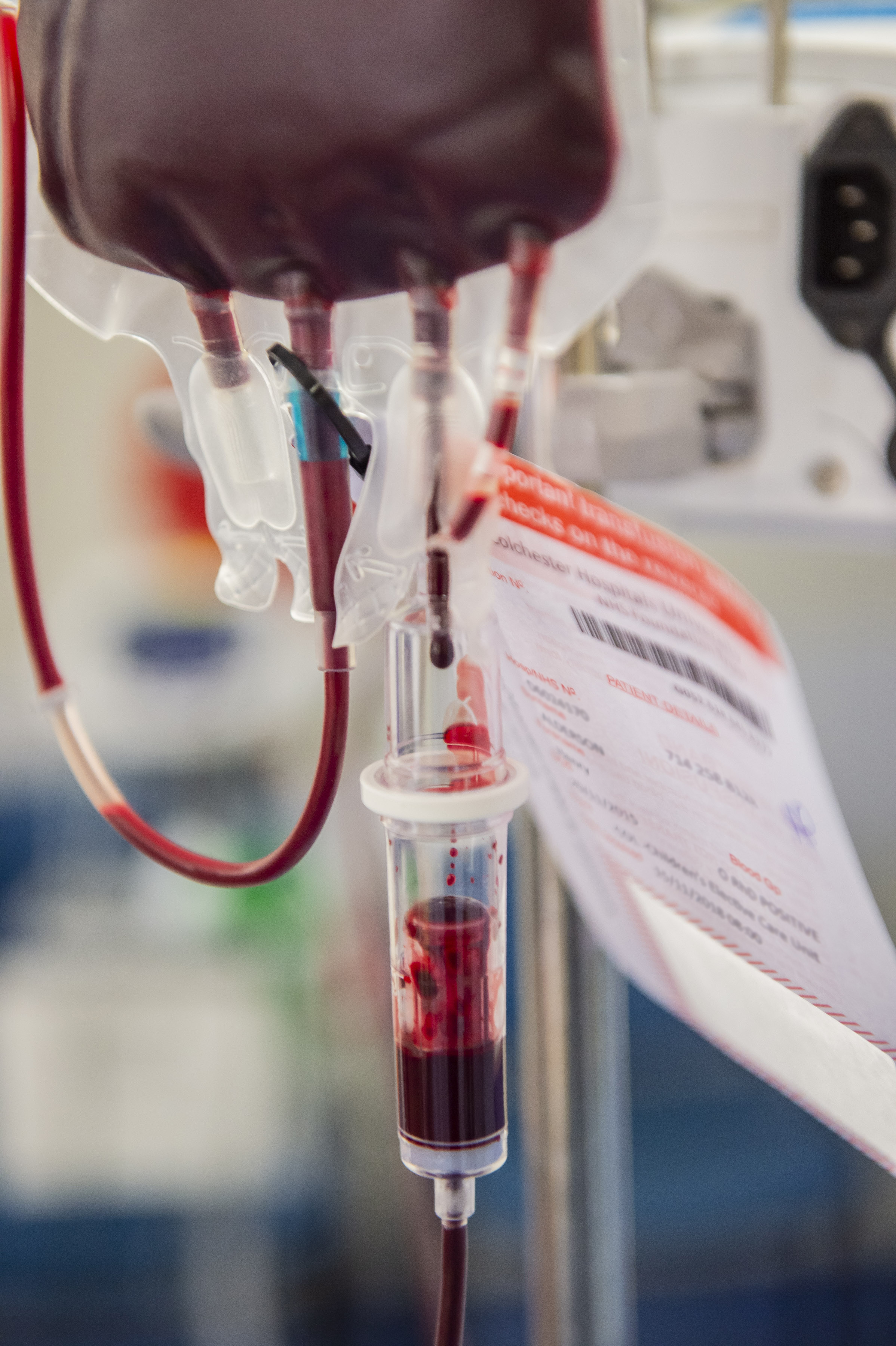
Most people picture blood donation as something that helps "someone, somewhere." In an emergency it is far more specific than that. A unit of blood has a name attached to it within hours, and the difference between a good outcome and a bad one is often measured in how long it took to find that unit.
Pakistan needs more than five million units of blood a year and collects roughly 2.3 million. Only about 18% of what is collected comes from voluntary unpaid donors. The rest is replacement donation — the hospital asks the patient's family to supply a unit before it will issue one. That single fact shapes every emergency blood search in this country: when a relative is admitted, the family becomes the blood bank.
What actually happens when blood is needed urgently
The sequence is more or less the same everywhere. A patient arrives after a road accident, goes into surgery, or has a postpartum haemorrhage. The treating doctor determines the blood group, the component needed, and how many units. The hospital blood bank checks what it holds, and often it has enough. When it does not, the family is told to arrange donors, usually with no guidance beyond the blood group.
That last step is where the time goes. A broadcast WhatsApp forward reaches hundreds of people who cannot help: wrong blood group, wrong city, donated three weeks ago, or simply asleep. Meanwhile the handful of people who could help never see it, because it never reached them.
Why the component matters as much as the group
"We need blood" is not enough information, and getting this wrong wastes hours.
- Whole blood — still used in some settings, increasingly replaced by components.
- Packed red cells — what most trauma and anaemia patients actually receive.
- Platelets — needed in dengue, leukaemia and some surgical bleeding. Platelets last only a few days, which is why platelet requests are both urgent and hard to fill.
- Plasma or FFP — used for clotting problems and major haemorrhage.
Ask the treating doctor to write down the component, the number of units, and the deadline. Every donor who responds will ask, and a family that cannot answer loses another twenty minutes on every call.
Widen the search using compatible groups
The most common avoidable delay is a family searching only for the patient's exact blood group. Compatibility is broader than that. An A+ patient can also receive A-, O+ and O-. Searching only for A+ discards more than half the people who could have helped.
Group frequencies in Pakistan matter here too. B is the most common ABO group at about 33.4%, closely followed by O at 33.1%, then A at 24.0% and AB at 9.7%. Around 9.4% of the population is Rh negative.
That last number explains a lot. If you are searching for O- or AB-, you need someone in roughly one in ten of the population who also happens to be the right ABO group, eligible to donate today, and close enough to reach the hospital in time. Negative-group requests routinely take a full day in mid-sized cities. Start those searches wider, and start them earlier.
Before you make a single call, check the blood group compatibility chart and write down every group that works for your patient.
The patients who need blood every month, not once
Emergency demand is what people picture, but it is not the largest standing demand. Roughly 100,000 people in Pakistan live with beta-thalassemia major and need transfusions every two to five weeks, for life. About 5,000 more children are born with the condition each year.
A one-off donation helps one person once. What a thalassemia family actually needs is a small group of matched donors who will come back next month, and the month after that. If you are healthy and eligible, becoming a repeat donor for one such patient is worth more than several scattered one-time donations. There is more on why thalassemia drives so much of Pakistan's blood requirement.
What to do before an emergency happens
Almost everything that makes an emergency search slow is fixable in advance.
- Know your blood group. A surprising number of people do not, and find out only when a relative needs them.
- Register as a donor somewhere findable. Willingness nobody can locate helps no one. This is the single biggest reason searches fail — not unwillingness.
- Check your eligibility once, so you are not working it out under pressure. Most healthy adults aged 18 to 60 and over 50 kg can donate. The full eligibility criteria are here.
- Keep your last donation date. Whole blood donors generally wait about three months between donations, and a donor who forgets is turned away at the counter.
A note on cross-matching
None of this replaces the laboratory. Paper compatibility is a way of finding candidates; the blood bank must still cross-match the actual unit against the actual patient before transfusion. If anyone offers you blood that has not been screened and cross-matched by a licensed facility, decline it. Unscreened blood carries real transmission risk, and in an emergency that risk is easy to rationalise away.
Finding matched donors faster
GeoBlood was built for the gap in that last step. Instead of broadcasting a request to everyone you know, it alerts verified donors whose blood group is compatible and who are close enough to the hospital to actually arrive in time, and lets the family and the donor coordinate inside the app without either side publishing a phone number.
It is free, carries no advertising, and is run by a registered 501(c)(3) nonprofit. If you are willing to donate, the useful thing you can do today — before anyone needs you — is register, so that when a search does start, you are someone it can find. You can also browse donors by city.
This article is general information, not medical advice. In a medical emergency, contact the treating hospital or your local emergency services first. Blood grouping and cross-matching must always be confirmed by a licensed laboratory before transfusion.